Phil Lanoue Photography
I previously worked as a news and sports photographer. Recently I have been enjoying wildlife photography. My approach toward bird photos is similar to sports photography. I attempt to capture mostly action and hopefully a unique perspective.
A Good Night Of Fishing Ruined!
We went over tonight to check out the salt marsh at low tide to see if much of anything was going on and we saw this great blue heron enjoying it’s favorite fishing hole back in the reeds among the oyster beds.
Suddenly the heron snapped to alert and we quickly realized what caused all the fuss…an unwelcome visiter had arrived which effectively curtailed the heron’s fishing in that area for the evening!

“Ok Folks…Let’s All Just Back Off And Give Him Some Room…”
It was a busy evening in the salt marsh last night. Many birds were in feeding at low tide. But it was not just the egrets and wood storks who were interested in all the fish that could be found swirling around in the water. An alligator made a surprise appearance as well. Alligators do not live in the salt water of the marsh, but they will make brief visits. When the possibility of a nice meal of fish brought in by the rising tide presents itself, everybody including the alligator wants to take advantage of that situation. The birds know that the gator presents no significant threat, it is only interested in scooping up fish. However, the birds will keep their eyes open and generally maintain a respectful distance. This ends up working to everyone’s advantage as the alligator’s actions can stir up fish which the birds are more then happy to grab.

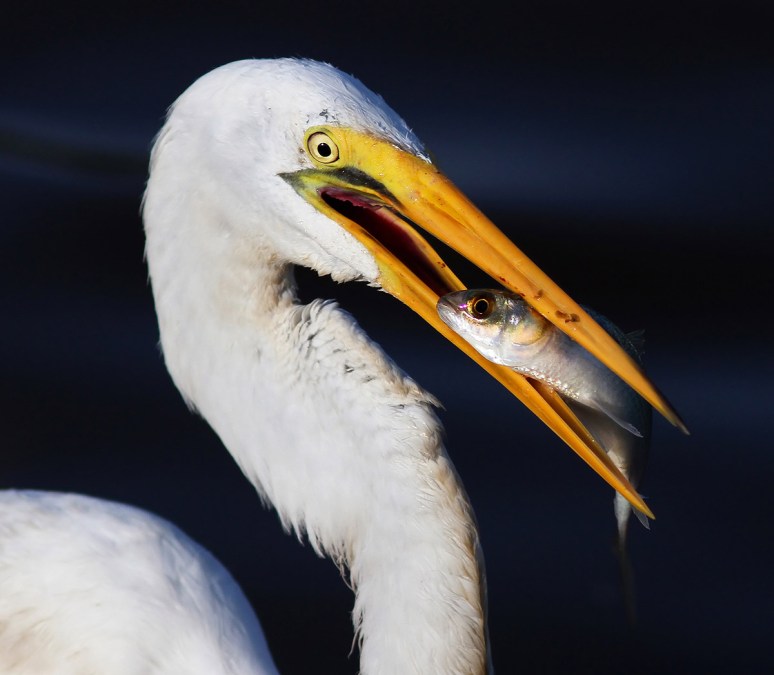
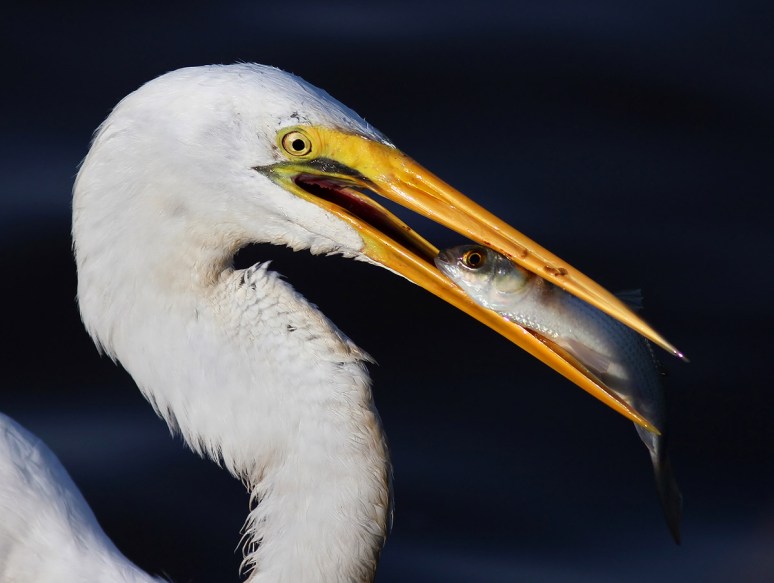
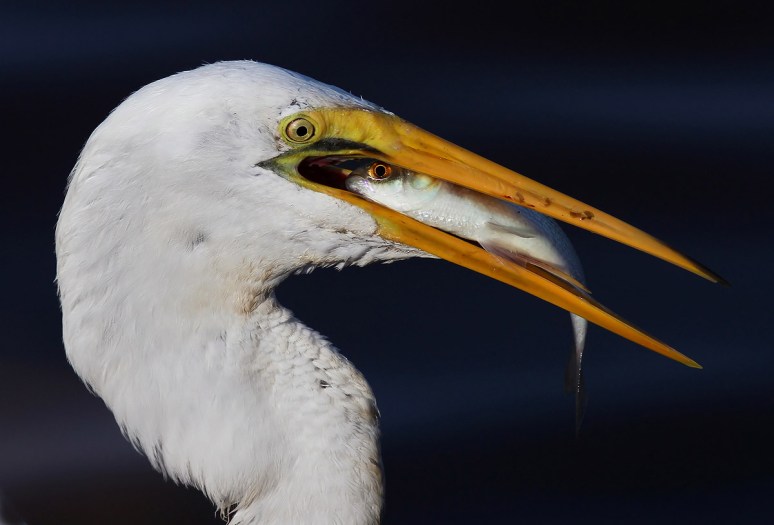
Down The Hatch!
Earlier this week we were watching this great egret fishing in the marsh pond.
It seemed to be quite skilled and we saw it catch several fish. This particular fish did put up a bit of a struggle, but after some artful maneuvering, the egret managed to successfully get the fish down!


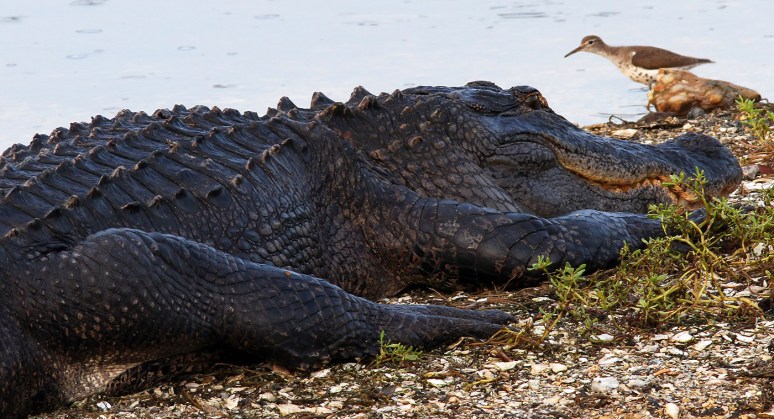
“It’s Probably Just A Log…”
Anhinga Fishing
The anhinga is a water bird that fishes by swimming under water and spearing a fish on the end of it’s very sharp bill.
It then must shake the fish off it’s bill in order to eat it. Often the anhinga will flip a fish into mid air and then catch it head facing down for easy swallowing. It does all this while swimming.
However, if a bit of land or shoreline is nearby, the anhinga will sometimes bring the fish onto land. The idea behind this is that should it drop the fish it can still pick it back up. But if the fish was dropped into water it could be lost.


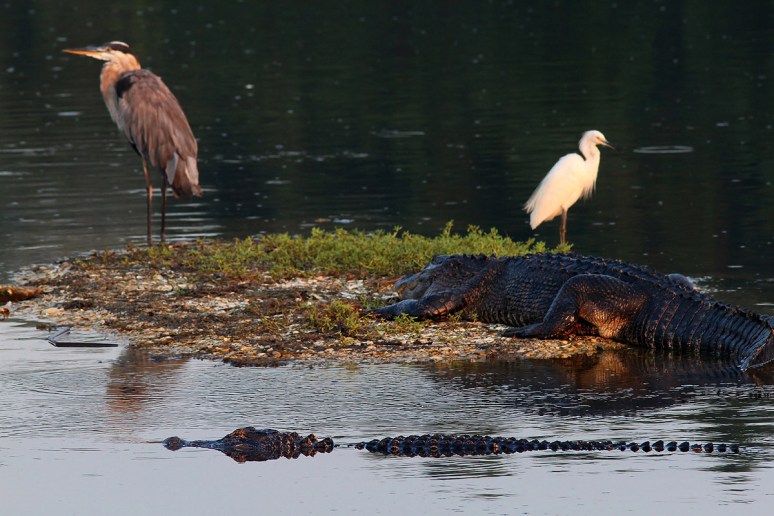
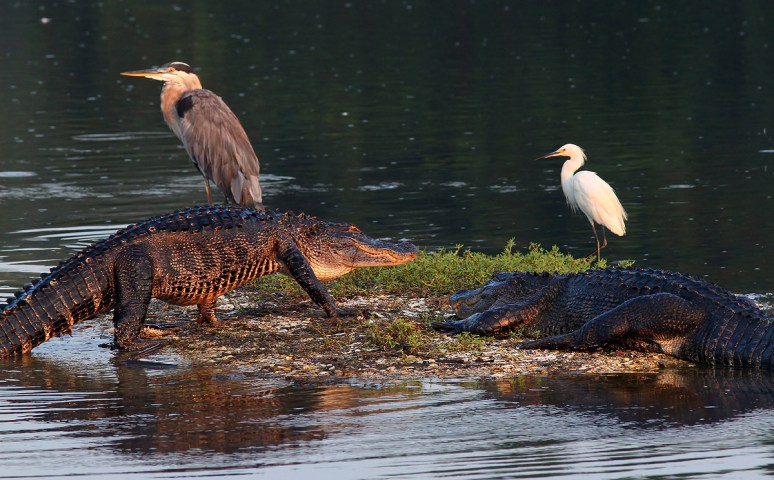
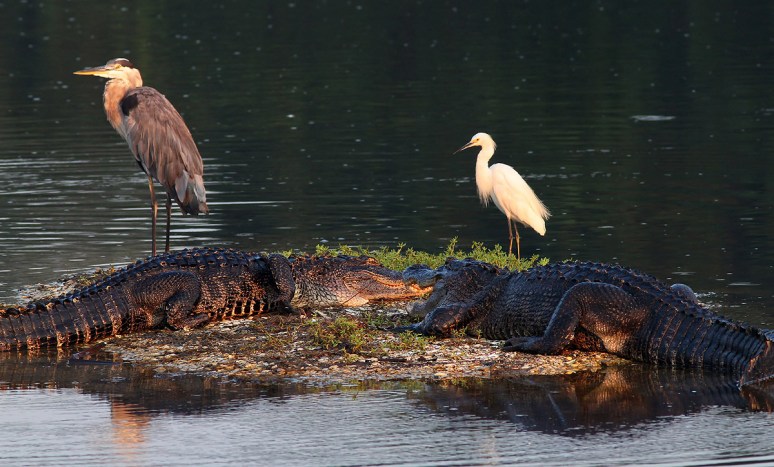
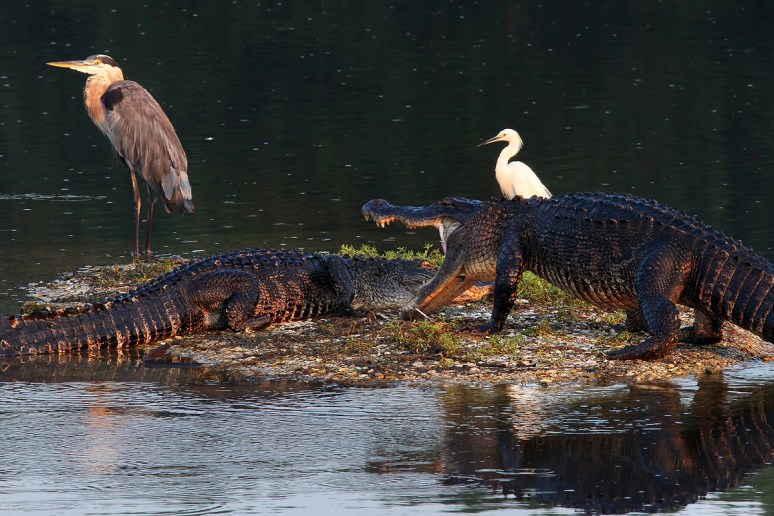
“Can’t We All Just Get Along?” Apparently Not…
Well yesterday morning started off quiet enough. An alligator, a great blue heron, and a snowy egret were all getting along just fine, enjoying a pleasant breeze and taking life easy.
The peace was not destined to last however. Another alligator came gliding in with thoughts of joining the group. Surprisingly, this seemed fine with the two birds. They stayed in their spots apparently unconcerned as the new arrival climbed aboard. The birds may have been OK with a fourth member joining the group but our original alligator was not happy at all. He immediately opened his mouth wide and showed his displeasure. At first the new guy thought that maybe he could just ignore the rude greeting and continue to lay there quietly. But he quickly realized that was not going to happen. The offended gator made his intentions perfectly clear and managed to chase away not only the interloping alligator, but the heron and egret as well.



Still Learning
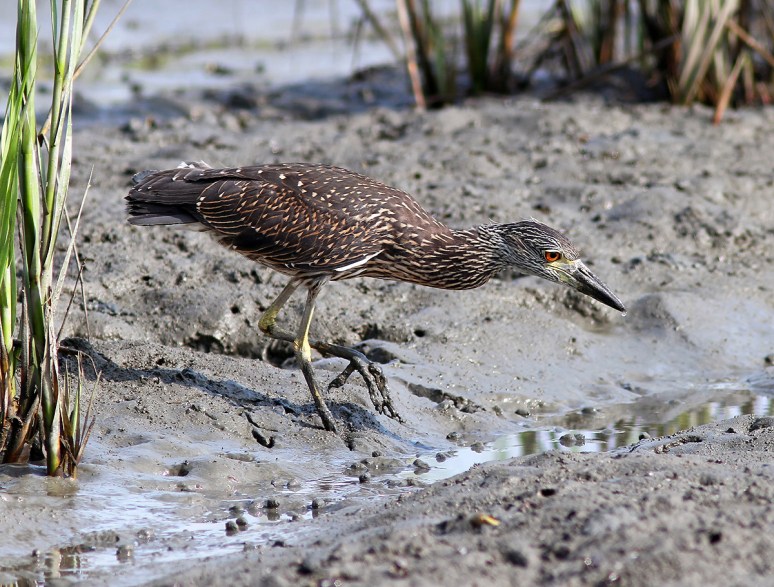
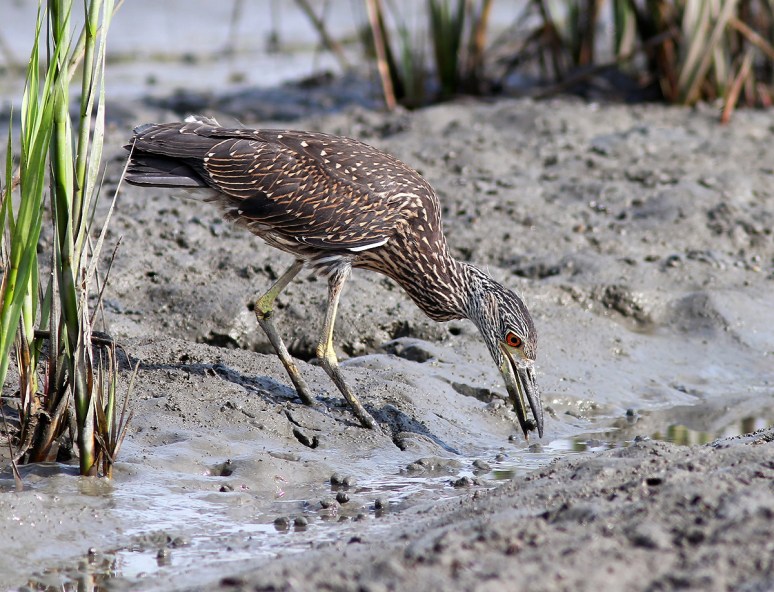
Yesterday morning we were watching this juvenile Yellow-Crowned Night Heron stalking the salt marsh at low tide.
The bird is on it’s own to find food and is still learning what might make a nice meal.
At one point it plucked a small crustacean out of the mud. The youngster seemed quite excited with it’s catch!
It even marched around proudly showing off this latest accomplishment. The hard shell crustacean is something that the young night heron might not even eat.
But for now, that’s all part of the learning process as it eventually grows into a more experienced adult bird.


Greenie Gets An Eel
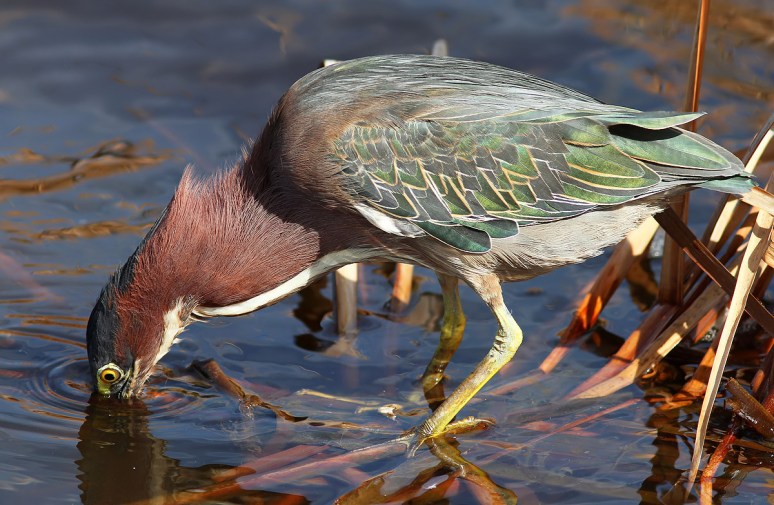
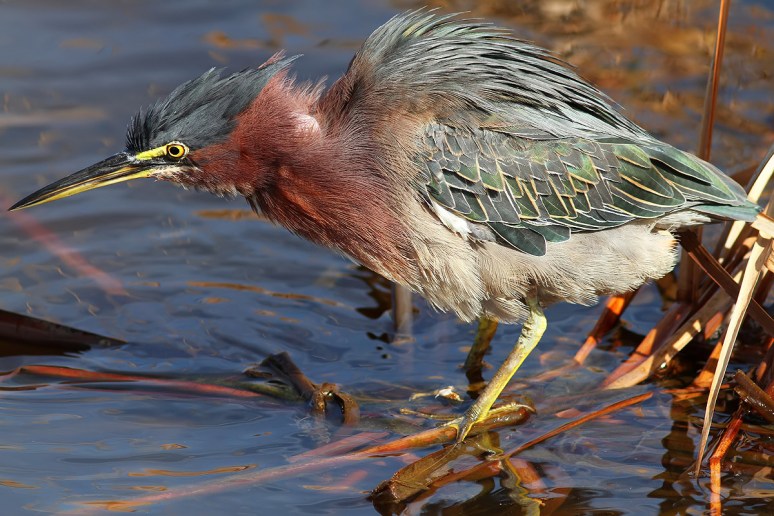
Green Herons can stay patiently still in one spot for hours, waiting for a fish or other small prey to come in close enough to be grabbed.
Sometimes we never see them strike at the water at all. Other times we will see one successfully come up with a catch, usually a tiny minnow.
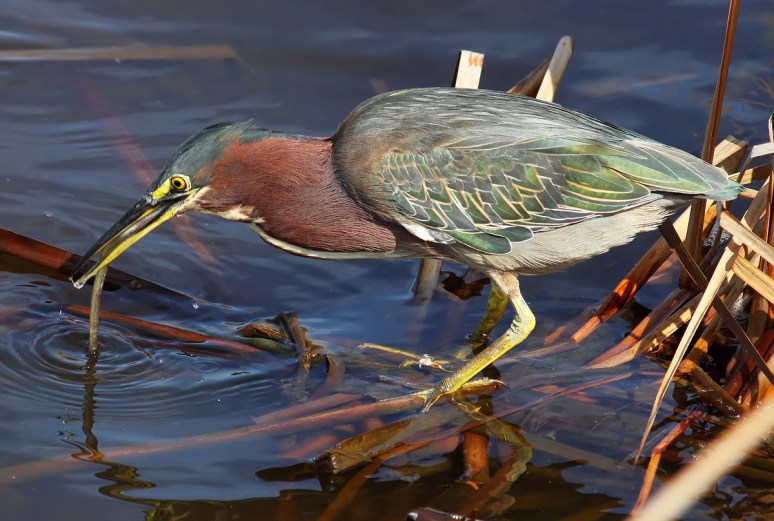
This weekend however we were quite surprised to see this greenie, who had been staring at the water for a very long time, strike and come up with an eel.
It took the heron a while to get the wriggling eel under control, and in a position to be swallowed. Right after the eel went down an odd sensation seemed to hit greenie and he twitched a bit then fluffed up!



 Phil Lanoue Photography