Phil Lanoue Photography
I previously worked as a news and sports photographer. Recently I have been enjoying wildlife photography. My approach toward bird photos is similar to sports photography. I attempt to capture mostly action and hopefully a unique perspective.
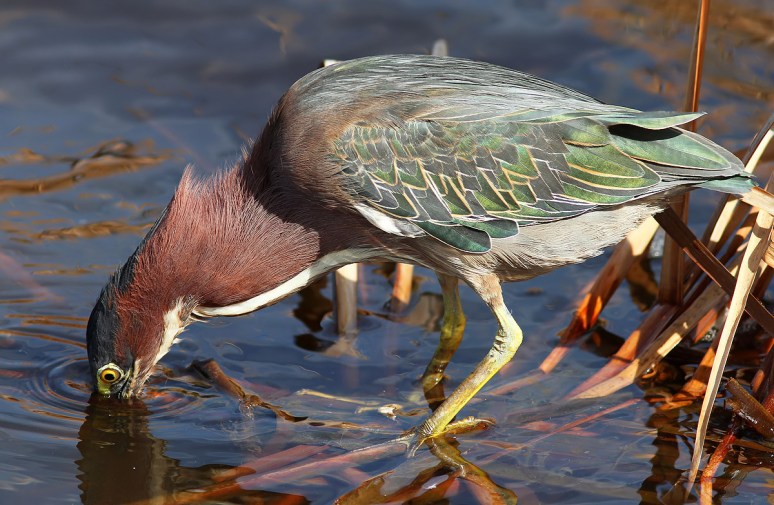
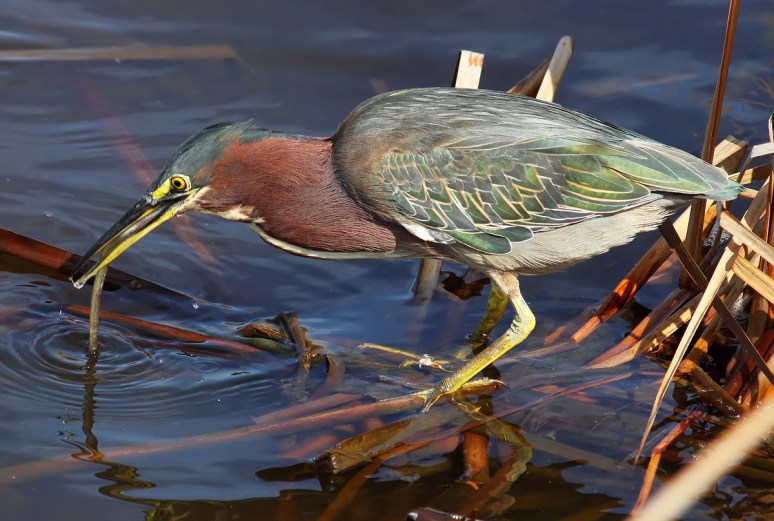
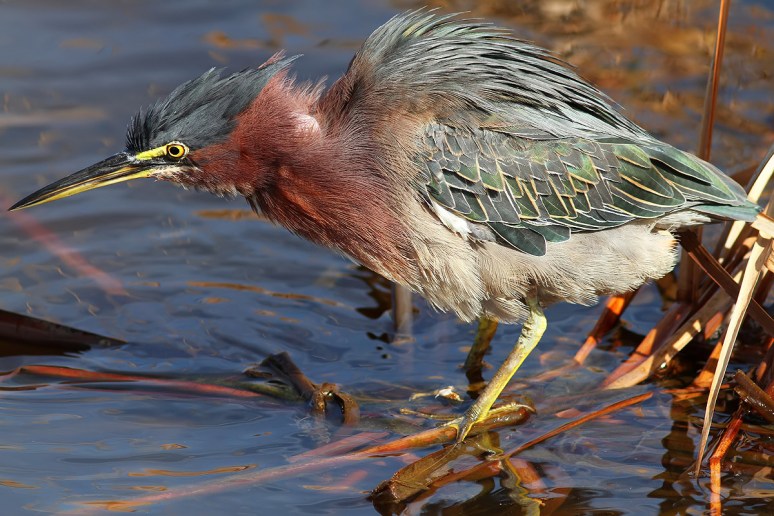
Greenie Gets An Eel
Green Herons can stay patiently still in one spot for hours, waiting for a fish or other small prey to come in close enough to be grabbed.
Sometimes we never see them strike at the water at all. Other times we will see one successfully come up with a catch, usually a tiny minnow.
This weekend however we were quite surprised to see this greenie, who had been staring at the water for a very long time, strike and come up with an eel.
It took the heron a while to get the wriggling eel under control, and in a position to be swallowed. Right after the eel went down an odd sensation seemed to hit greenie and he twitched a bit then fluffed up!



“I Can’t Bear To Watch”
These two cormorants were cavorting about with each other recently while their friend looked on.
Finally, after several minutes of the pair’s public display, their friend couldn’t take it any more…and just shut his eyes…


Race For The Gold
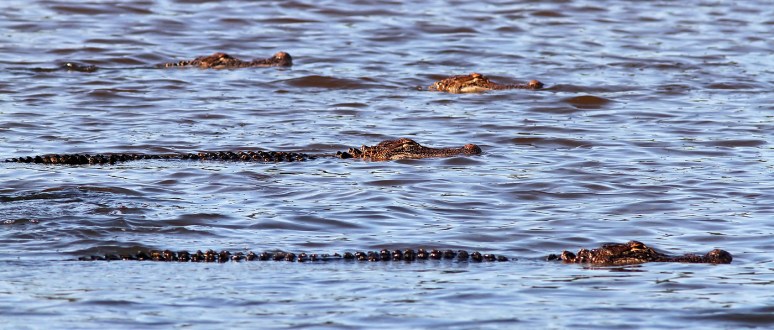
The 2012 Marsh Pond Olympics continued this morning with another thrilling event…the 100 meter freestyle swim.
The previous record holder for this event is in lane four, representing the Alligator Federation, but he is falling behind a bit and needs to make his move quickly.
In lane three we have the 2008 Silver medal winner from the Marsh Islands who is in second place right now.
Lane two features an athlete competeing in his first ever Olympics. He came into the games with the colorful nickname “Bayou Bob”, and is from the Gator Republic.
As they near the finish line it’s almost too close to call, but out front in lane one is the favorite for this event from the powerhouse team from New Swampland.
His humorous catch phrase…”See Ya Later” can be seen on T Shirts and posters all over this Olympic Venue.
Sometimes They DO Get Away!
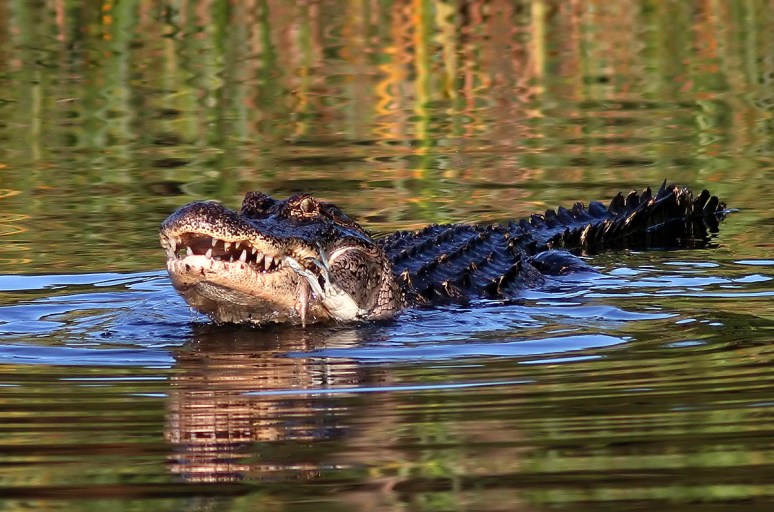
We saw this alligator feeding on fish and crabs in the marsh pond yesterday morning.
At one point it opened it’s mouth wide and we realized it had a large crab.
But just as the gator was about to crunch down on it’s catch, crabby made a break for it!
The crab got away. Somehow it managed to evade the alligator’s bite and escape over the side.
The alligator, as you might imagine, was not at all pleased to have lost it’s prime catch and this was not a happy face we were seeing at the end.




The Secretive Clapper Rail
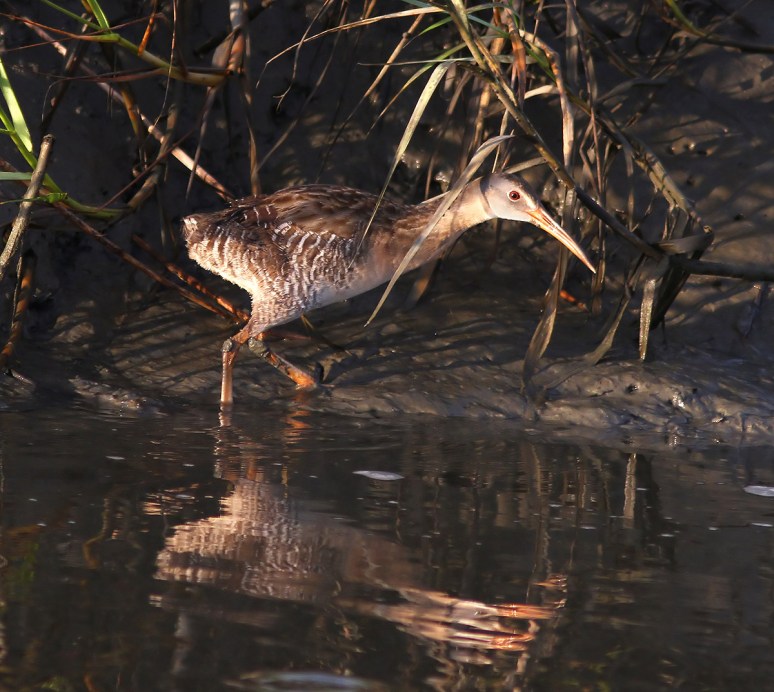
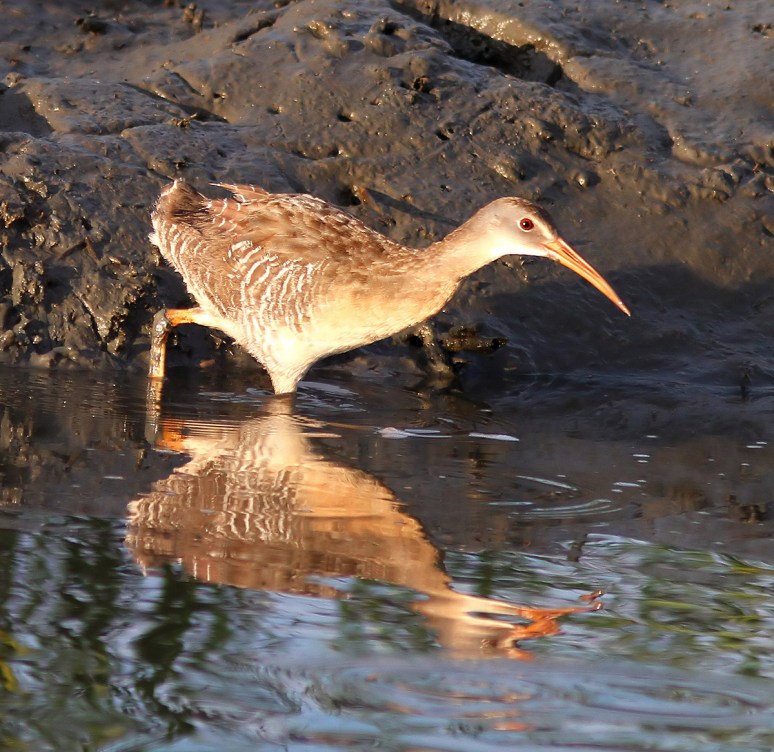
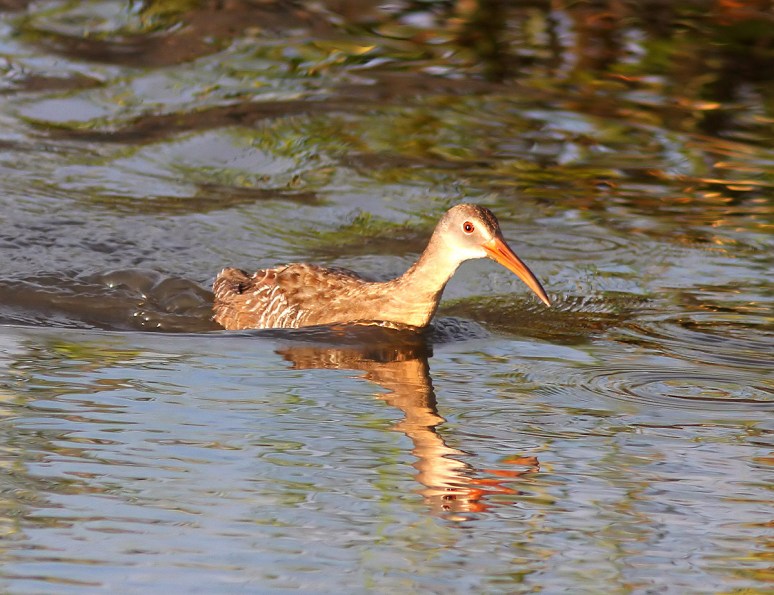
Yesterday evening I was surprised to see a clapper rail stroll out from among the reed grass in the salt marsh at low tide.
Sometimes referred to as a “marsh hen” the clapper is similar in size and appearance to a chicken.
The clapper rail is a very secretive bird that is not often seen. It prefers to stay tucked in and creep around on mats of dry marsh reeds as it travels slowly looking for small fish and crustaceans.
This one shocked me by suddenly walking into the shallow water and swimming to the opposite edge of the marsh near where I was set up.
It walked around for a short time providing me with some excellent views, before quickly disappearing back into the reeds.


Breakfast In The Marsh
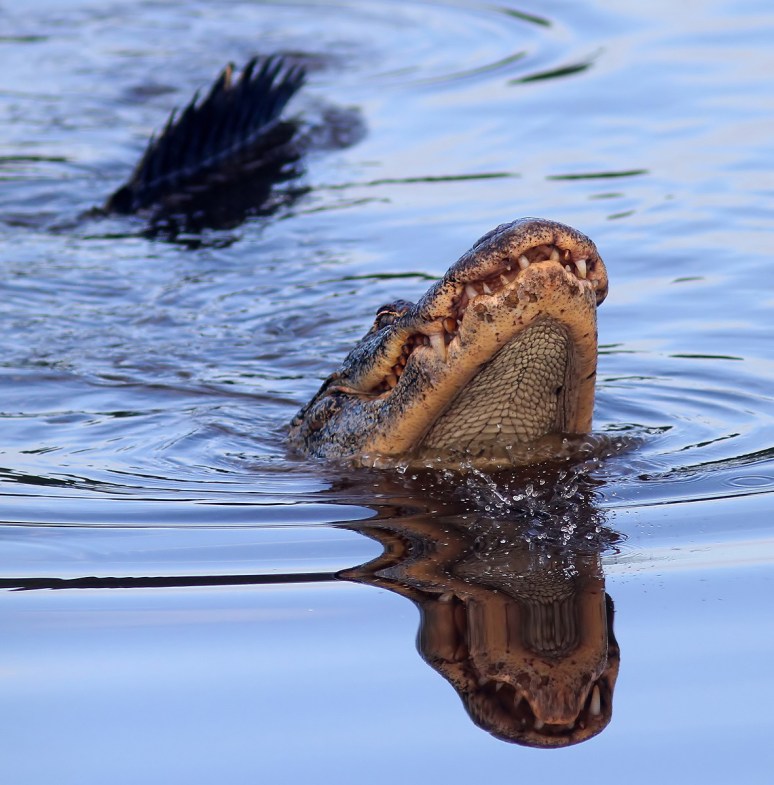
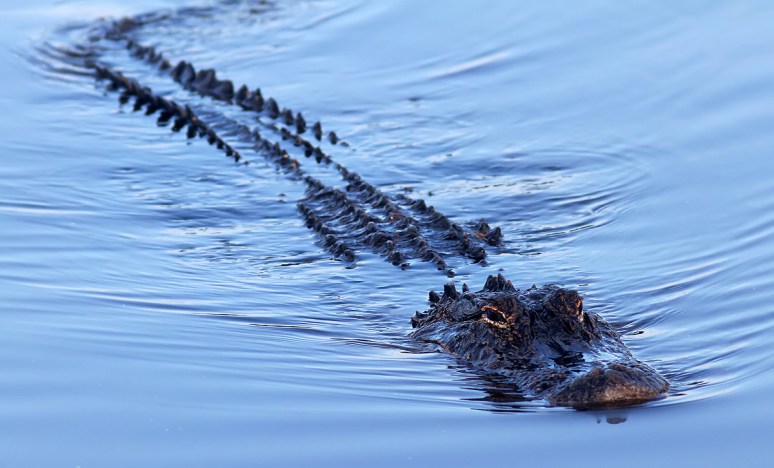
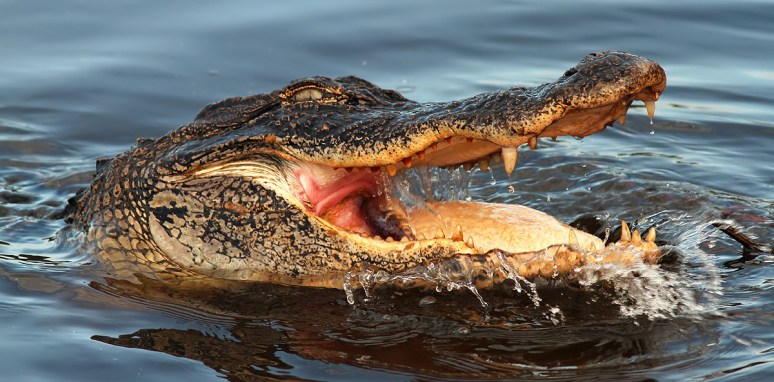
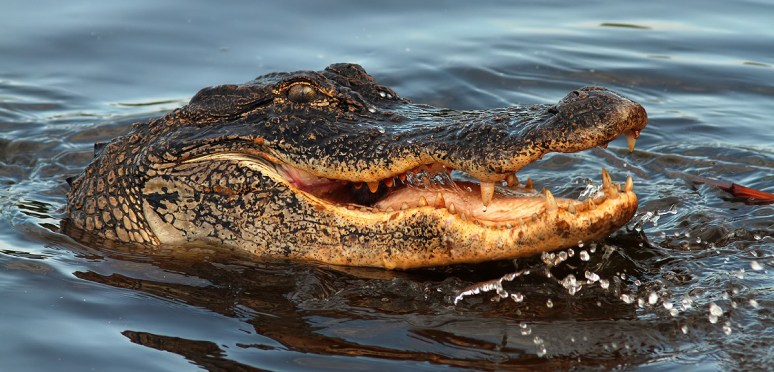
Yesterday morning we were watching some alligators feeding on fish and crabs in the marsh pond.
Sometimes after catching something, they will lift their heads up out of the water making it easier to swallow their meal.
The gators won’t eat every day, but when food is plentiful they will stuff themselves! Once full, they can take a few days off from feeding and get in a nice long rest.
Time Lapse Over The Marsh
This is a 32 second time lapse video taken by me last night of the sky and clouds over the salt marsh.
That large white cloud is a towering cumulus that became a thunderstorm. What happens is that as the air rises, it eventually hits the top of the atmosphere and then spreads out in all directions.
You can see toward the end of the time lapse as that cloud system gradually moves north and fades from view.
Great Blue Heron Coming And Going
Earlier in the week we saw this great blue heron take off from the salt marsh at low tide and fly across the reed grass. Flying low to the ground, he patrols “his” area…constantly on the alert for a potential meal. While keeping an eye out for food, he’s always watching for any other bird who may invade “his” territory and provide competition for that tasty fish!


 Phil Lanoue Photography