Muddy Ibis

Well we don’t call them “muddy ibis” for nothing. Just look at the feet and face of this guy as he comes in for a landing in the salt marsh earlier this week. I’m actually rather surprised he managed to keep those feathers as white as they are, usually they get those mucked up as well.

But I really like these birds, they are always active and fun to watch and generally don’t have a lot to say. About the most I’ll hear from an ibis is the occasional low grunt. 🙂

muddy-ibis-coming-in

Stretching It Out

This great blue heron jetting across the reeds in the salt marsh was using every inch of his body to really streamline his flight.

I’m not sure what the urgency was, but these birds often purposely create drama if none actually exists at the moment.

gbh-stretched-out-flight

Late Afternoon

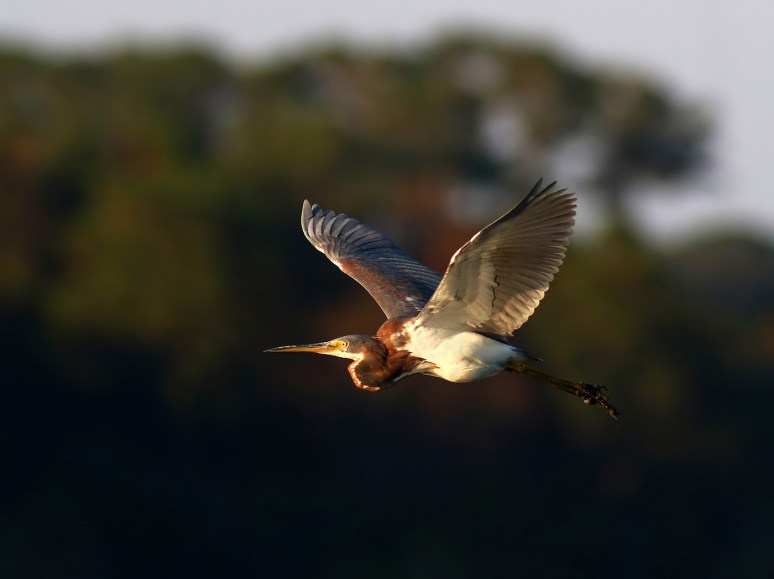
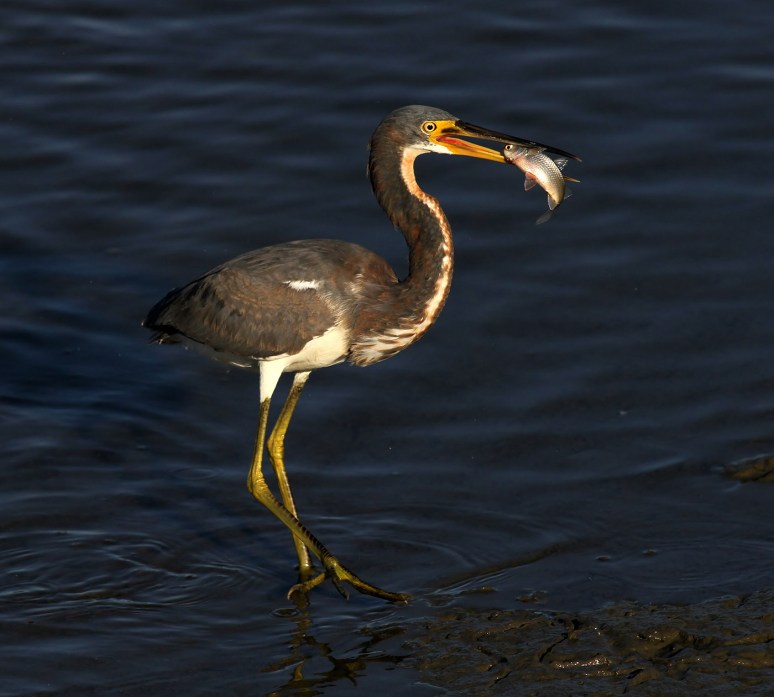
At this time of year, what used to be early evening light is now late afternoon light. But it’s still one of the nicest times to be out in the salt marsh area and having the chance to watch colorful birds such as these tricolored herons.

Here we have a juvenile flying back toward the tress perhaps to roost as his day may be coming to a close.

The adult however was not done fishing and has a nice catch to wind up his day. In both cases, it’s a nice time of year to be out there.

tricolor-in-late-afternoon-light-

tricolor-in-late-afternoon-light-

“Hey! Look What I Can Do!”

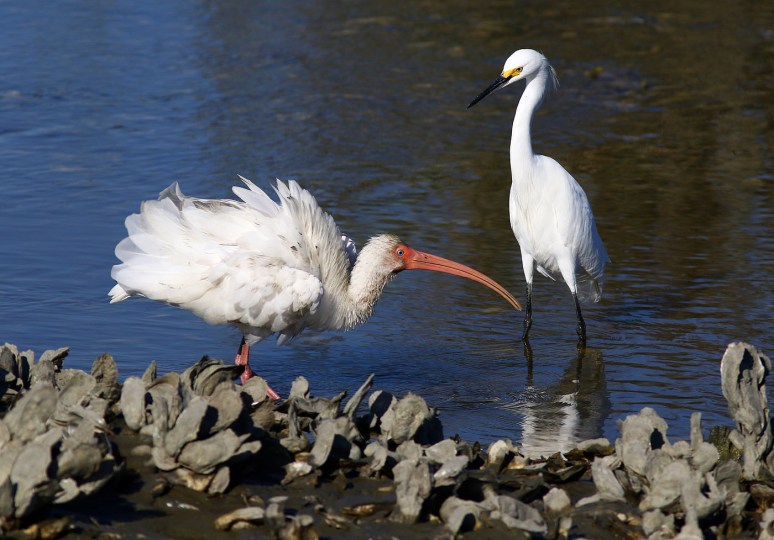
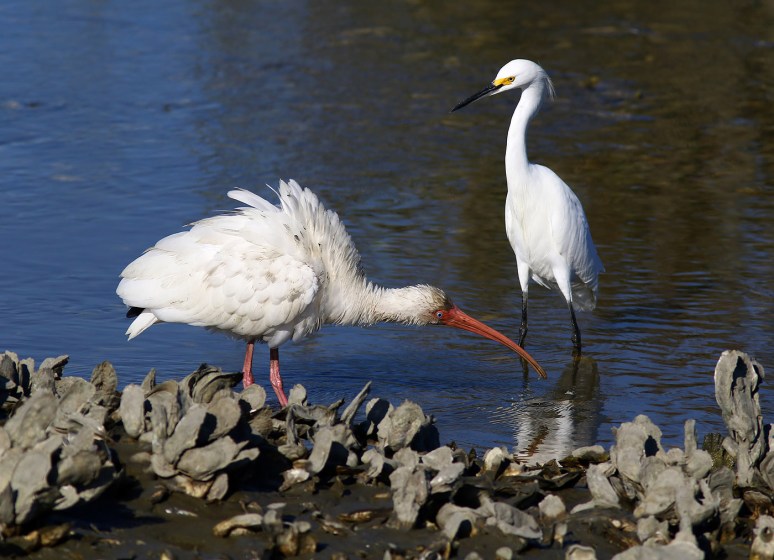
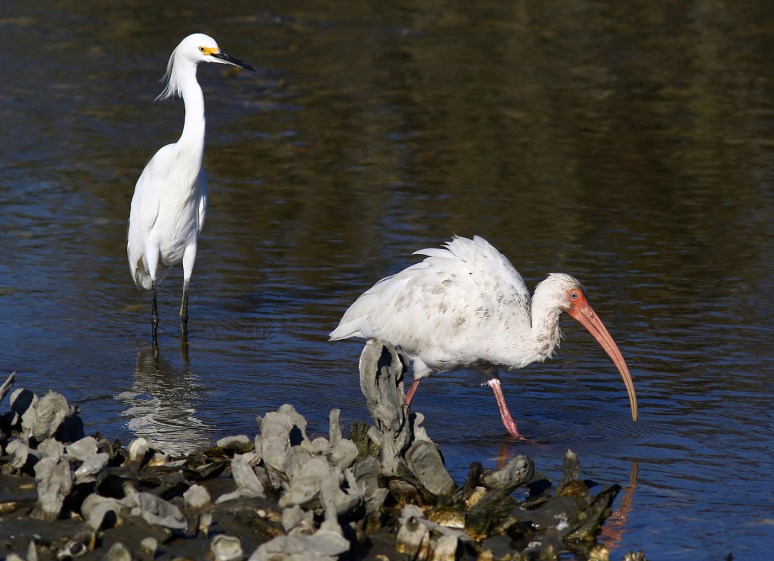
Earlier this week we had a white ibis and snowy egret fishing together in the salt marsh. Suddenly the ibis decided he wanted to show off for his snowy friend and go into a full fluff and twist act.

I thought the expression on snowball’s face was priceless, he never reacted even slightly. Even as the ibis walks away looking all pleased and satisfied with himself I couldn’t get a read on the snowy. He was either thinking… “Dude, that was so totally awesome!” Or… “Man, that ibis is nuts.”

Either one works I suppose but comical and interesting in any case.  🙂

hey-look-what-i-can-do-

hey-look-what-i-can-do-

hey-look-what-i-can-do-

hey-look-what-i-can-do-

Free Fish! Tonight Only

When word got out at the salt marsh earlier this week that there would be a free seafood buffet for Happy Hour, the wood storks absolutely mobbed the joint.
This is of course typical wood stork behavior, as they usually travel in a gang and like to push everybody around with those huge stork bodies.
Advertise free food and that’s just encouraging their boorish behavior.

free-fish-tonight-

free-fish-tonight-

Taking A Break

An anhinga took a break from fishing in the salt marsh earlier this week and was utilizing the standard anhinga wing drying pose.

Although anhingas are water birds and feed by catching fish under the water, they are not ‘water proof’ in the traditional sense. They need to spread their wings to dry them off in the sun before going back at it again later. I always say they look like wet cats coming out of the water, and their feathers look a lot like cat fur when dry. 🙂

They also tend to keep their heads on a swivel while drying, always continuously looking in every direction possibly for predators which in this area would include alligators.

anhinga-taking-a-break

Working Hard

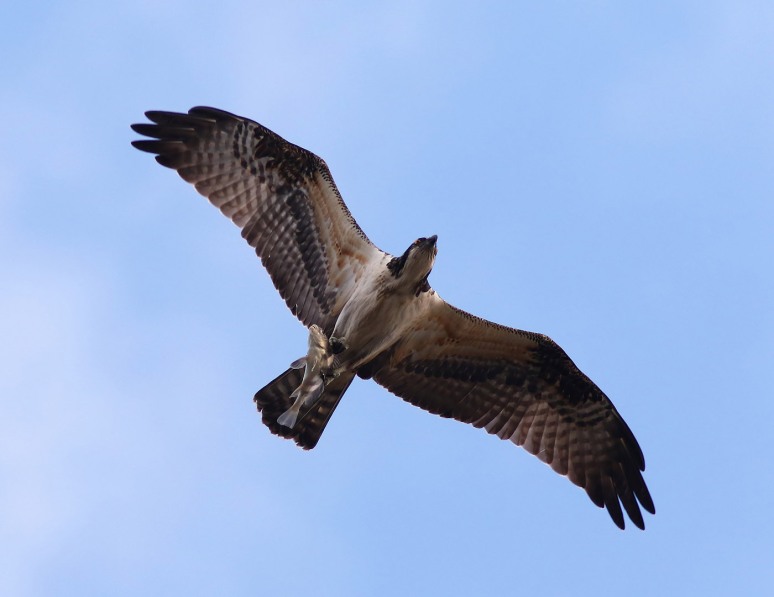
The ospreys have been all over the place around the salt marsh for the past couple of days. These really are some hard working birds unlike a certain other lazy pirate bald eagle which shall remain nameless.

These two ospreys pictured here were successful with a catch, but they so often miss when diving down for a fish. That, along with the  seemingly endless flying and circling over a likely area, has to take a lot of energy. But at least in these cases they got to keep their reward as ‘you know who’ didn’t come blasting in out of nowhere in an attempt to steal the prize.

hard-working-osprey-catches-fish-

hard-working-osprey-catches-fish-

hard-working-osprey-catches-fish-

hard-working-osprey-catches-fish-

Anhinga vs. Cormorant… Two Fishing Styles

Both the anhinga and the cormorant are water birds. They each feed by swimming under the water and chasing after fish using their big flipper feet to rapidly propel them along.

But once a fish is caught, that is where the similarity ends. I took these anhinga photos this past weekend and the cormorant photos today, both in the salt marsh right around the same areas in fact.

The anhinga uses the spear fishing method. It will spear a fish on the end of it’s very sharp pointed bill and pop his head up out of the water with the fish still stuck there. But now the anhinga has to get the fish off it’s bill in order to eat it. This is most often done by flipping the fish straight up and off the bill and then catching it in mid air  head first on the way down. This is one of the all time best, most interesting and exciting bird fishing actions in my view and always a thrill to see.

The cormorant on the other hand has a more pedestrian approach to fishing. It goes with what I call the ‘grab and gulp’ method. Cormorants simply grab the fish and hold it in place vice grip style using that stout and strong bill with a hooked end, before also popping up it’s head to finish the task. A slight toss back of the head with one quick gulp and our fishy meal is down the hatch. Nothing fancy, but sure gets the job done. Actually the cormorant may utilize the more efficient method since it requires less action which leaves time for more eating.

But I’m giving the edge to the anhinga for style, and as a spectator I have to admire the show. 🙂

anhinga-and-cormorant-fishing-

anhinga-and-cormorant-fishing-

anhinga-and-cormorant-fishing-

anhinga-and-cormorant-fishing-